




The e-commerce industry has seen a massive surge in recent years, with online shopping becoming more prevalent than ever before. The COVID-19 pandemic has further accelerated this trend, as consumers have increasingly turned to online shopping to meet their needs. As we move toward 2023-2024, it is clear that e-commerce will continue to play a crucial role in the retail landscape.
To stay competitive, businesses must keep up with the latest e-commerce trends and incorporate them into their strategies. In this article, we will explore some of the key e-commerce trends that are expected to dominate in 2023. These trends include social commerce, personalization, augmented reality (AR) and virtual reality (VR), subscription services, accelerated use of mobile shopping, and conversational marketing. We have witnessed the transformative power of Artificial Intelligence (AI) tools in revolutionizing customer engagement. In this article, we explore some of the most popular AI tools utilized in e-commerce today, including chatbots and assistants, intelligent product selection, and intelligent search.
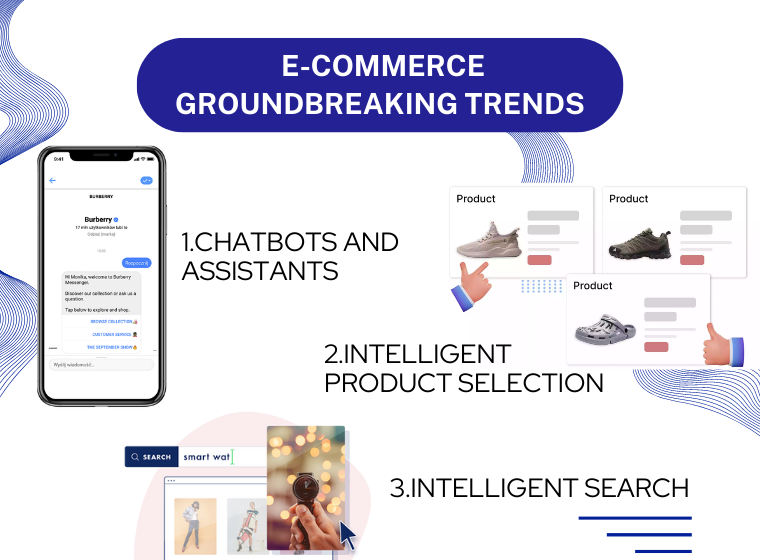
1. Chatbots and Assistants:
In e-commerce, "Chatfuel" is a popular AI tool for creating conversational chatbots. It utilizes NLP and Machine Learning to understand user queries and provide personalized responses. Other notable chatbot AI tools include Watson Assistant by IBM, Tars, Ada, Bold360, LivePerson, and Drift. These tools enable businesses to handle multiple conversations simultaneously, ensuring 24/7 availability and seamless customer support. Implementing these chatbots enhances user experiences, boosts conversions, and improves customer satisfaction.
2. Intelligent Product Selection:
In the field of intelligent product selection, several AI-powered tools offer exceptional capabilities. These tools utilize advanced algorithms and machine learning techniques to analyze customer data, including purchase history, browsing behavior, and social media interactions, in order to generate personalized product recommendations. Some notable tools in this space include Apptus eSales, Adobe Sensei, Dynamic Yield, RichRelevance, Nosto, and Reflektion. By leveraging AI and machine learning, these tools can identify patterns and similarities among customers, enabling accurate and tailored suggestions. Businesses can leverage these tools to deliver highly relevant recommendations, ultimately enhancing customer engagement, increasing conversions, and fostering customer loyalty.
3. Intelligent Search:
In the realm of intelligent search for e-commerce, numerous renowned AI tools offer exceptional capabilities. While "Algolia" is recognized for its prowess, other notable AI search tools include Coveo, Searchspring, Fusion by Lucidworks, Sajari, Doofinder, Twiggle, and Findify. These tools go beyond basic keyword matching and employ advanced search techniques, such as semantic analysis and natural language understanding. They excel in comprehending user intent and context to deliver highly accurate search results. By adapting to user behavior and preferences, these AI algorithms ensure that customers discover the most relevant products even with vague or incomplete search queries. The collective impact of these intelligent search tools is reflected in enhanced customer satisfaction, increased conversion rates, and reduced bounce rates.
By understanding these trends and incorporating them into their strategies, businesses can position themselves for success in the rapidly evolving e-commerce landscape. The following sections will provide more detail on each of these trends and explore the opportunities and challenges they present for businesses in 2023.
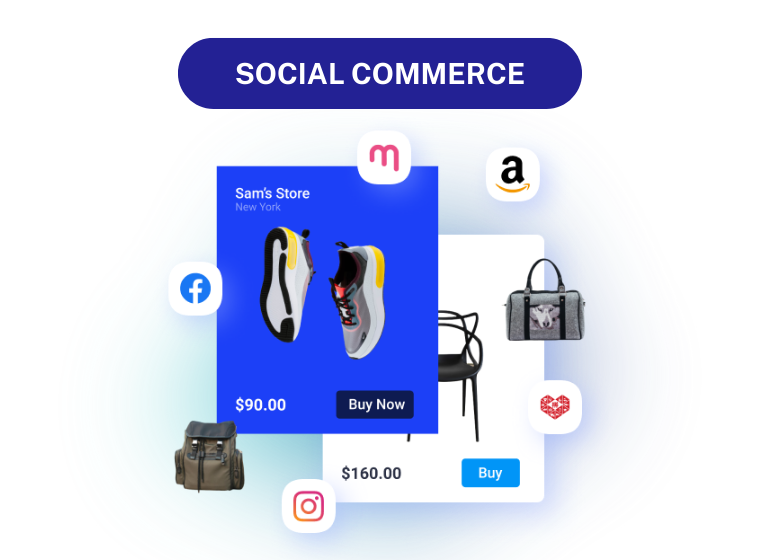
Social Commerce:
Social commerce is a growing trend that will dominate e-commerce in 2023. It involves using social media platforms like Facebook, Instagram, and Pinterest to sell products directly to consumers. Businesses can reach more people and generate more sales by using social media features such as shoppable posts and product tagging. They can also partner with influencers who have large followings to promote products and target specific audiences. Social commerce creates a seamless shopping experience for customers on social media. As social media platforms improve their e-commerce features, social commerce will become more critical for e-commerce success in 2023.
Personalization:
Personalization is a vital trend in e-commerce that will grow in 2023. It means adapting the shopping experience to each customer’s needs and preferences. This can include personalized products, content, and promotions. Businesses can use data and analytics to provide customized experiences.
Personalization can boost customer loyalty and engagement, as customers feel valued and understood. Personalization can also increase sales, as customers buy products that are relevant to them.
In 2023, we can expect more businesses to use personalization technologies, such as machine learning, predictive analytics, and CRM systems. These technologies will improve personalization across all channels and touchpoints.
Augmented Reality (AR) and Virtual Reality (VR):
AR and VR technologies are transforming the e-commerce industry. They allow customers to see products in 3D, try them on virtually, and explore virtual stores. These technologies can reduce returns, as customers can make better purchase decisions. They can also improve customer experience, by making shopping more fun and interactive.
In 2024, more businesses will use AR and VR technologies, as they become cheaper and easier to implement. This will make them more accessible for smaller businesses and more attractive for customers. We will also see more partnerships between e-commerce platforms and AR/VR technology providers, which will boost the adoption of these technologies in the e-commerce industry.AR and VR are key trends in the e-commerce industry that will enhance customer experience and satisfaction.

Subscription Services:
Subscription services are very popular and will become more so in 2024. They offer convenience to customers and steady revenue to businesses. Customers enjoy having products delivered regularly without ordering. Businesses benefit from loyal and engaged customers and data on customer preferences.
In 2024, more businesses will offer subscription services to stand out from competitors and meet customer needs. Subscription services can be a great way to build customer relationships and improve products and services. One area where subscription services will grow is in the B2B sector. More businesses will offer subscription-based services to other businesses, such as SaaS solutions. This will create more value and efficiency for both parties. Subscription services are a key trend in the e-commerce industry that will give businesses an edge over others.
Accelerated use of mobile shopping:
Mobile shopping is a big trend that will continue to grow in 2024. More customers are using their smartphones to shop online, and businesses need to optimize their mobile shopping experiences. This means making websites and apps easy to use on smaller screens, with fast loading and simple navigation. Businesses that don’t do this will lose customers to competitors who do.
Mobile shopping offers convenience to customers, who can shop from anywhere, at any time. It also offers security and reliability, with improved mobile payment technology and cybersecurity.
Businesses need to think about the whole mobile customer journey, not just the website or app. They need to use technologies such as mobile chatbots, push notifications, and mobile payments to enhance the mobile shopping experience. Mobile shopping is a key trend in the e-commerce industry that will give businesses an advantage over others.
Conversational marketing:
Conversational marketing is a trend that uses chatbots, live chat, and other tools to interact with customers in real-time. It aims to create a more personalized and efficient shopping experience for customers and to provide businesses with useful customer data. Conversational marketing can offer customers personalized recommendations based on their data. It can also answer questions and provide support in real-time. This can improve customer satisfaction and loyalty, and increase sales and revenue for businesses.
Conversational marketing can also process orders in real-time. Customers can buy products and services without leaving the chat or messaging platform. This can improve the customer experience and simplify the purchasing process. Conversational marketing is a growing trend that will become more popular in 2023. It can help businesses to engage with customers and improve the shopping experience. It can also help businesses to collect valuable customer insights.
Conclusion:
The main trends that will influence the e-commerce industry in 2024 are related to social media, personalization, immersive technologies, subscription models, mobile devices, and conversational tools. These trends will help businesses to connect and communicate with customers more effectively, offer customized and engaging shopping experiences, provide convenient and affordable products and services, and improve customer satisfaction and loyalty. These trends will also help businesses to increase sales and revenue in the e-commerce industry in 2024 and beyond.